
Active adult leasing professionals hear it all the time:
“Why would I sell my house just to rent?”
It’s one of the most misunderstood objections. And here’s the reality: if you treat it like a simple financial question, you risk missing the underlying thoughts entirely.
It’s not just about money, it’s about identity, control, security, timing, and often a fear of making the wrong decision.
Handled well, this objection can become a turning point in the conversation. Handled poorly, it becomes a dead end.
Let’s talk about how to navigate it the right way.
It’s not about renting vs. owning, it’s about what renting represents
When a prospect asks why they should sell their home and rent, what they’re really saying is:
“Am I making a smart financial move?”
“What happens to the equity I’ve built?”
“Is this the right time in my life to make a change?”
“Will I regret giving this up?”
And underneath all of that:
“Will I lose an important part of my identity if I leave my home?”
That’s why jumping straight into a financial rebuttal like, “Well, actually, when you look at home maintenance costs…”usually falls flat. You’re responding to an emotional life question with a spreadsheet answer.
Instead, start with curiosity: “That’s a great question. Tell me, what’s most important to you about staying in your home right now?” That one question shifts you from reacting to leading.
Reframe the conversation from monthly rent to total lifestyle ROI
Once you understand their “why,” you can begin to reframe the conversation. Most prospects are evaluating this decision through a narrow lens: mortgage vs. Rent. Your job is to widen that lens. Here’s how:
Expand to total cost of living. Homeownership comes with a long list of tangible, predictable costs: property taxes, insurance, maintenance, utilities, and HOA fees. It also has its share of intangible and often unpredictable costs including time, effort, and unexpected repairs. When you calmly walk through these, prospects often have a moment of realization: “I didn’t think about it that way.” But don’t stop at cost.
Introduce the concept of lifestyle return on investment. This is where the real shift happens. No one moves to an active adult community to save money, they move to live better. What are they gaining? Freedom from home maintenance, a built-in social environment of peers, access to amenities and activities, simplified lifestyle, and more time for what they actually enjoy. This is the conversation most salespeople skip—and it’s the one that matters most.
Try this: “When you think about your current home, what are the things you love—and what are the things you’d be happy to never deal with again?” Now you’re not selling rent, you’re helping them evaluate their lifestyle.
Make it real with tools and stories that build confidence
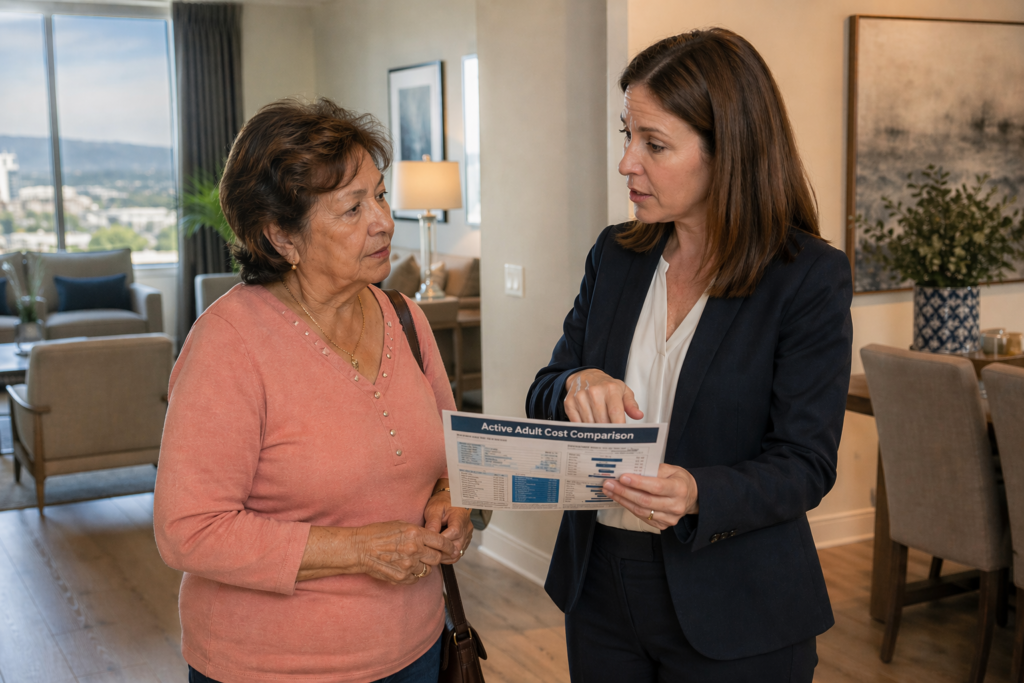
Even when prospects start to see the bigger picture, they still need help making it tangible. Use a cost comparison tool, but position it carefully. A side-by-side breakdown of homeownership vs. community living can be powerful, but only if it’s framed correctly.
This isn’t about proving them wrong. It’s about helping them see clearly.
Walk through it together. Ask questions. Let them react.
When they arrive at the conclusion themselves, it sticks.
Reframe equity as flexibility
One of the biggest sticking points is the idea of “losing” money by renting, but selling a home doesn’t eliminate equity, it unlocks it.
That equity can become a financial cushion, a way to support lifestyle choices, and a tool for peace of mind. Position it as possibilities, not loss.
Leverage the power of resident stories
Nothing builds confidence like hearing from someone just like them who has already made the decision. You’ve heard it before from your residents: “I didn’t realize how much work my house was until I left.” “I wish I had done this sooner.” “I finally feel like I can enjoy my time again.” Use these stories. They bridge the gap between logic and emotion in a way numbers never will.
Address the emotion directly, don’t dance around it
This is where great salespeople separate themselves: they don’t avoid the emotional weight of the decision—they acknowledge it.
“This is a big decision. Your home represents a lot, and it’s completely normal to take your time working through it.”
That one statement does more to build trust than any pricing sheet ever will. Give prospects permission to move at their own pace, then help them start picturing what life could look like on the other side. “What would a typical day look like for you here?” “What would you be most excited about?” “What would you not miss about maintaining your home?” When they begin to visualize, they begin to move toward making a decision.
Common mistakes to avoid
Even experienced leasing professionals can unintentionally derail this conversation. Watch for these common pitfalls:
- Jumping straight into financial justification
- Minimizing emotional attachment to the home
- Over-talking instead of asking questions
- Using generic, scripted responses
Remember: this is not a one-size-fits-all objection. It’s a personal decision that requires a personalized approach.
Use “Polite Persistence” for the win
Here’s the reality: This objection is rarely resolved in one conversation, and that’s okay. In fact, it’s expected. Your role is to stay present, helpful, and consistent. Follow up strategically with a cadence of one of these tools over the weeks following the initial inquiry or tour:
- An Active Adult Living Cost Comparison Worksheet
- A resident story that aligns with their situation
- An invitation to a social event or a casual visit
Each touchpoint builds clarity and each conversation builds confidence. This is polite persistence in action: not pressure, but presence.
A framework you can start using right away
When this objection comes up, keep it simple with this process:
- Acknowledge: “That’s a great question, and a really common one.”
- Explore: “What’s most important to you about owning your home right now?”
- Reframe: Introduce them to total lifestyle ROI
- Support: Provide tools, stories, and next steps
No scripts, no pressure, just a clear, human conversation.
Leave them with a final thought: It’s not about renting, it’s about living better
At the end of the day, prospects aren’t choosing between owning and renting, they’re choosing between maintaining a lifestyle that may no longer serve them and stepping into one that gives them more freedom, connection, and ease.
Your job isn’t to convince them to rent, it’s to help them see what’s possible.
When you do that well, this “objection” stops being a barrier and becomes the moment everything clicks for them.
Grow Your Occupancy is here to improve your active adult occupancy outcomes
Grow Your Occupancy’s team of active adult leasing experts are experienced and knowledgeable at moving the occupancy needle at active adult and 55+ communities. Find out how sales coaching, training, customized sales tools and playbooks, and sales specialists for hire can help you achieve the results you’re after. Visit growyouroccupancy.com or call 877-GROW-OCC to learn more and schedule a free 30-minute consultation.